uPurchase
Demand forecasting and purchasing, in one screen.
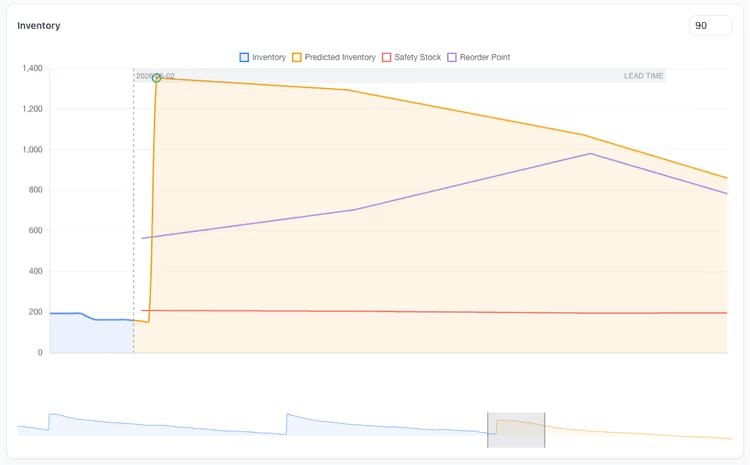
uPurchase is the demand-forecasting and inventory-intelligence layer Business Central never had. It classifies every SKU, forecasts demand by location, sizes safety stock against a chosen service level, applies supplier calendars and lead times, weighs carrying cost against stockout risk, and turns it all into purchase suggestions. Every recommendation answers the question “why” before you have to ask it: the forecast, the safety stock, the lead time and the current position all live on the same row as the quantity. Edit any number and the projected stock curve updates before anything is committed to Business Central. Purchasers get to challenge the numbers instead of trusting them blind, and controllers see service level, stockouts and excess as daily KPIs rather than monthly autopsies.

Forecasts that learn from what really happened.
Statistical and pattern-based forecasts trained on your real consumption. They update daily and always show the trend, the seasonality and the confidence band, so you can sanity-check a number before you commit money to it.
A forecast is a hypothesis
Most forecasting tools produce a single number and ask you to trust it. uPurchase gives you the number and shows how it got there, including the model, the assumptions and how well it fits your history. When something looks wrong, it usually is, and you can correct it inline before it becomes a stockout or an excess.
- Live forecasts per item and location, always up to date with your Business Central data
- Automatic model selection per demand pattern (stable, seasonal, intermittent, lumpy)
- Outlier detection for things like promotions, one-off projects and data errors
- Forward overrides for known events (campaigns, contracts, end-of-life)
- Forecast accuracy tracked over time, per item and per category
- Actual vs forecast chart side by side, across your full data history
Signals you'd reach for this.
See uPurchase in a 30-minute demo.
A real screen-share with someone who built it. No slides.